A SASSA scam remains one of the biggest threats to social grant beneficiaries in South Africa. Fraudsters target millions of people who depend on monthly payments. They use fake SASSA messages, phishing links, and impersonation calls to steal personal information.
The South African Social Security Agency (SASSA) distributes grants to more than 18 million beneficiaries nationwide. Because of this reach, scammers constantly attempt to exploit the system.
Therefore, beneficiaries must learn how to recognise a SASSA scam, verify official information, and report fraud quickly. The following guide explains the latest scam tactics and the safest ways to protect your grant.
ALSO READ: SASSA Appeal Pending in 2026: What It Means and What Happens Next
Most Common SASSA Scam Tactics
Fraudsters use several tactics to deceive beneficiaries. These scams often appear through SMS, WhatsApp, or social media.
Fake Grant Announcements
Criminals spread messages about new grants. A recent example is the fake R700 grant application message circulating online.
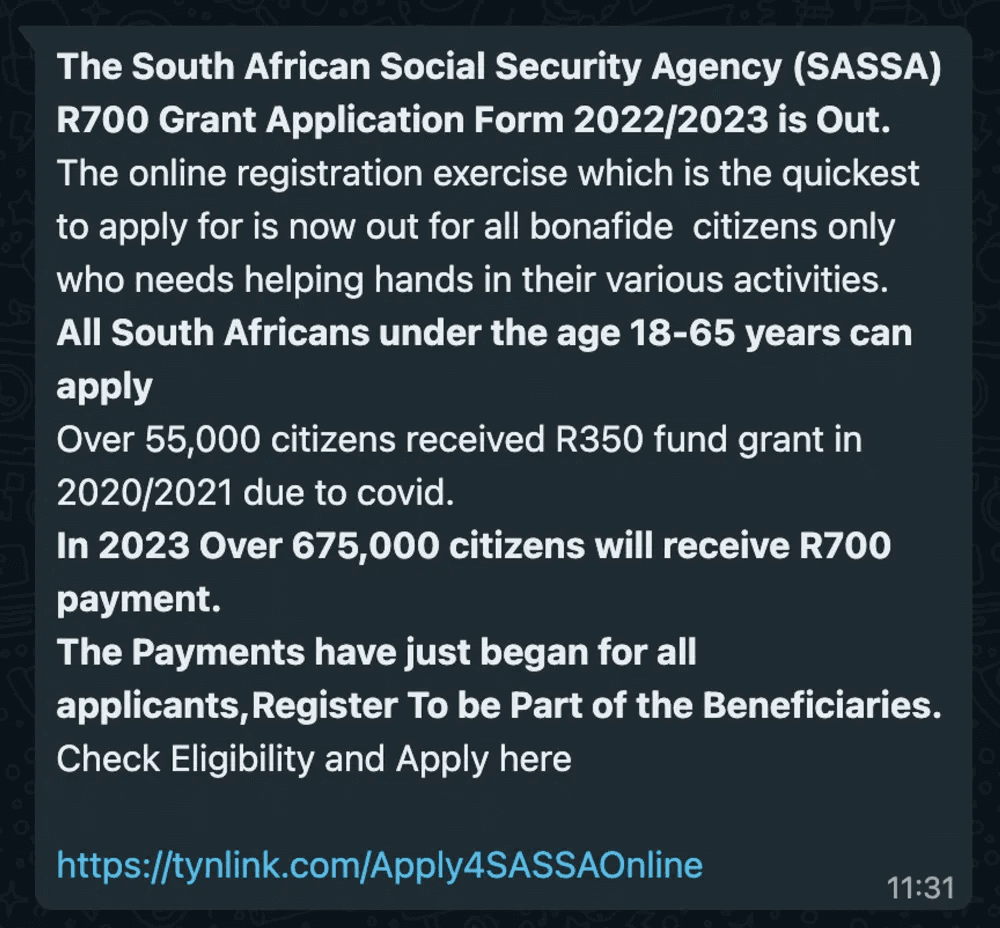
SASSA confirmed that the message is false and warned beneficiaries not to click the link.
SASSA Phishing Links
Scammers send links that mimic official SASSA websites. These pages request personal information such as:
- South African ID numbers
- Banking details
- One-time passwords (OTP)
- Phone numbers
This tactic is known as SASSA phishing. The information collected is used for identity theft.
Fake SASSA Messages
Another common tactic involves fake SASSA messages claiming payment problems or account verification.
These messages often include phrases such as:
- “Confirm your payment immediately”
- “Your grant will be suspended”
- “Click here to verify your account”
However, SASSA does not request sensitive information through SMS links.
Payment Fee Scams
Fraudsters sometimes demand small payments to “release” grants. They claim beneficiaries must pay to secure or confirm their funds.
SASSA has confirmed that all grant services are free.
How to Verify Official Channels
Always verify SASSA communication through trusted sources. Official platforms help beneficiaries confirm accurate information.
Official SASSA Websites
Use only these verified government websites:
These platforms provide official updates, application services, and payment information.
Official Contact Channels
Beneficiaries can also verify messages through:
- SASSA Toll-Free Number: 0800 60 10 11
- Email: GrantEnquiries@sassa.gov.za
- SASSA Offices nationwide
If a message appears suspicious, contact SASSA before taking action.
What to Do After Clicking a Scam Link
Many victims realise the problem after clicking a suspicious link. Acting quickly can reduce the damage.
Follow these steps immediately:
- Stop entering personal information. Close the page immediately.
- Change your banking passwords and PINs.
- Contact your bank to secure your account.
- Report the incident to SASSA.
- Monitor your grant payments for suspicious activity.
Quick action helps prevent criminals from accessing your funds.
ALSO READ: Update SASSA SRD Banking Details in 2026 (Step-by-Step)
How to Report Fraud
Reporting a SASSA scam protects other beneficiaries and helps authorities investigate fraud networks.
Use the following reporting channels:
- SASSA Fraud Hotline: 0800 60 10 11
- Email: fraud@sassa.gov.za
- South African Police Service (SAPS)
- SA Fraud Prevention Service: https://www.safps.org.za
The government encourages beneficiaries to report scams immediately.
Protection Checklist for Beneficiaries
Every beneficiary should follow these basic safety practices.
Stay safe by following this checklist:
- Never share your PIN, OTP, or banking password.
- Avoid clicking links in suspicious messages.
- Use only official .gov.za websites.
- Ignore requests for grant “processing fees”.
- Verify all grant announcements with SASSA.
- Report suspicious messages quickly.
These steps reduce the risk of falling victim to SASSA phishing and fake SASSA messages.
FAQs
How do I verify an official SASSA message?
Verify the message through the official SASSA website or the toll-free helpline. Avoid clicking unknown links.
What are common SASSA scams?
Common scams include fake grant announcements, phishing links, impersonation calls, and payment fee requests.
Where do I report SASSA fraud?
You can report fraud through the SASSA hotline (0800 60 10 11), the SASSA fraud email, or the South African Police Service.
SASSA scams continue to target vulnerable beneficiaries across South Africa. Fraudsters rely on fear and urgency to trick victims.
However, beneficiaries can stay safe by verifying official messages and avoiding suspicious links. Always rely on trusted government sources before sharing personal information.
Staying informed remains the most effective defence against a SASSA scam.