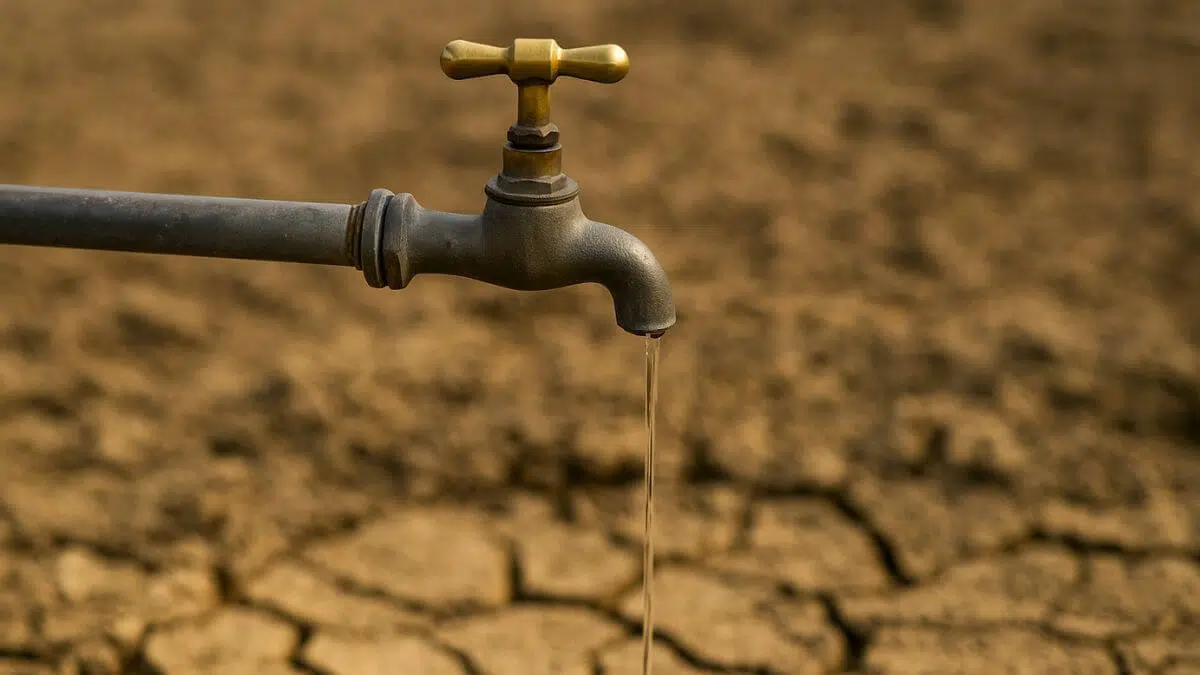
Johannesburg water demand keeps Gauteng water usage under pressure. The latest official dashboard shows Johannesburg at 1,763 million litres a day (MLD) on 12 January 2026. This sits 408 MLD above its Water Use Efficiency (WUE) target of 1,356 MLD.
Even with strong dam storage, high daily withdrawals strain the distribution system. The Department of Water and Sanitation (DWS) links the risk to leaks, illegal connections, and high per-person use.
Latest figures show where the pressure sits
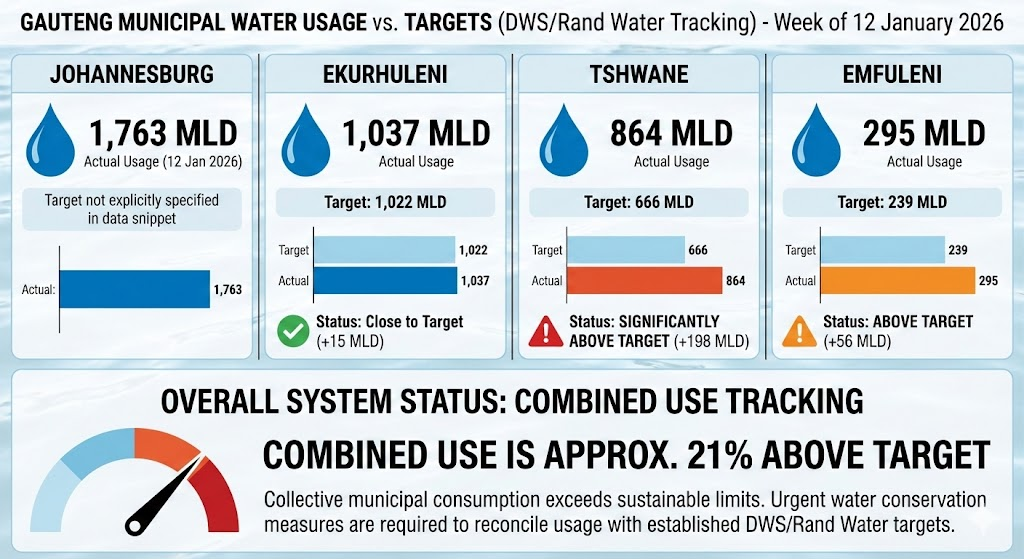
Gauteng water usage past 1700 megalitres links to behaviour and losses
High consumption and system losses move together. DWS states that “the demand for treated water in Gauteng is occasionally exceeding the available supply of treated water from Rand Water.”
Per-person use stays a major driver. EWN reports DWS Director-General Sean Phillips placing Gauteng’s average at over 279 litres per person per day, well above a global average of 173 litres.
Phillips also frames the risk in plain terms: “South Africa is a water-scarce country … we should be using less than the international average.”
Storage looks healthy, yet distribution stays fragile
The same DWS dashboard shows the Integrated Vaal River System (IVRS) at 100.1% surface storage on 12 January 2026. It also notes the Vaal Dam “remained at over 100%” and sat at about 102% for the week to Tuesday.
So the immediate crunch sits in delivery, not raw water volume. When demand runs high, the network loses pressure faster during faults and planned maintenance. The City of Johannesburg flagged a 54-hour Rand Water maintenance window at Eikenhof Pump Station (6–8 January 2026), tied to long-term reliability work.
Leaks and backlogs keep raising the floor on demand
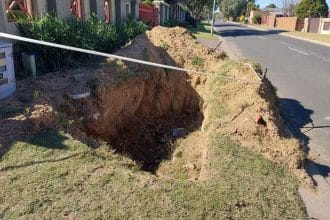
Leaks push withdrawals higher because cities must buy extra bulk water to meet the same household needs.
The DWS dashboard tracks municipal leak and burst reporting. It lists:
- Johannesburg reported backlog: 20,915 (end November)
- Tshwane reported: 18,130
- Total reported: 46,684, versus total repaired: 44,140
DWS also urges municipalities to fix leaks, remove illegal connections, enforce restrictions, and use punitive tariffs for wasteful use.
Practical steps residents and businesses should take now
High users set the pace for stability. Phillips puts the focus on personal choices and outdoor use patterns.
Use these steps to cut demand without disrupting daily life:
- Repair dripping taps and running toilets within 24 hours
- Keep showers short and turn taps off while brushing
- Run full laundry loads only
- Skip hosepipe car washing and daytime garden watering
- Fit low-flow showerheads and dual-flush systems
- Report bursts and theft fast through municipal channels
Johannesburg Water lists fault reporting options, including fault@jwater.co.za and its call centre numbers, for logging incidents
Also Read: Gauteng Faces Water Crisis as Department Warns of Overuse