South Africa is on the brink of a major shift in road safety policy after Transport Minister Barbara Creecy announced government plans to lower the country’s legal blood alcohol limit for drivers to zero. The proposed change would fundamentally alter how drunk driving is regulated, ending decades of allowance that permitted motorists to consume limited amounts of alcohol before getting behind the wheel.
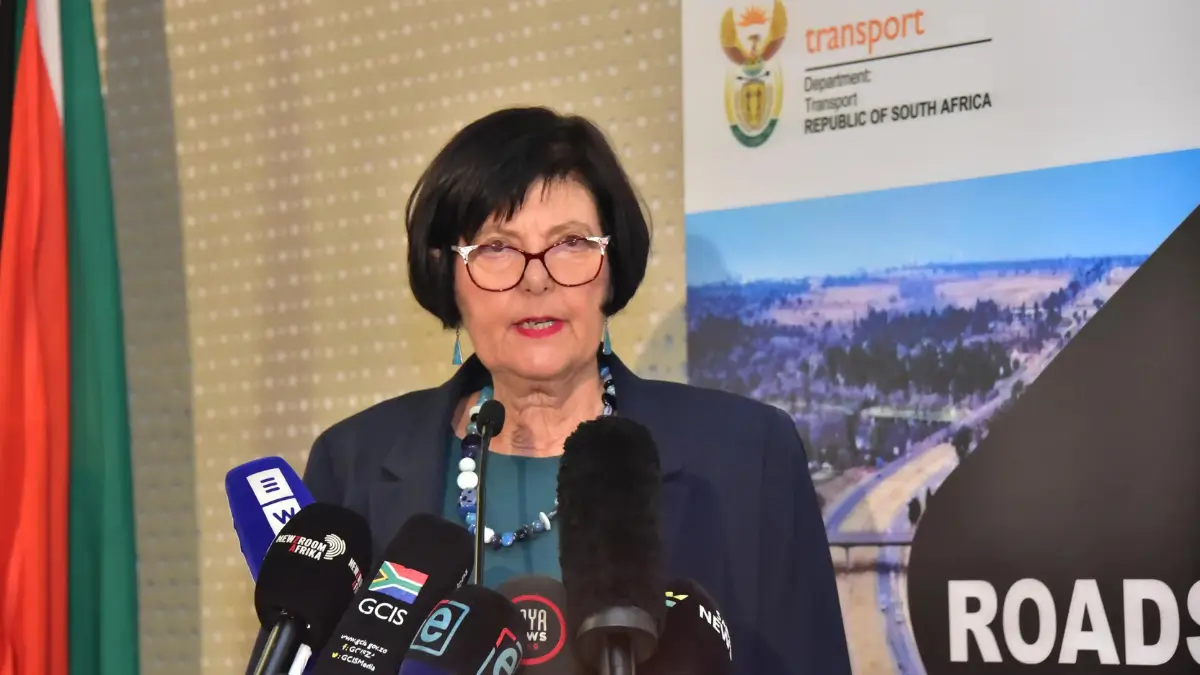
Speaking during a media briefing alongside Deputy Minister Mkhuleko Hlengwa, Creecy confirmed that her department intends to amend Section 65 of the National Road Traffic Act. The amendment would introduce a clear, unambiguous rule: no alcohol consumption is permitted for anyone who intends to drive.
“The time has come for us to amend the law, so that we have a clear cut, easy to understand, and unambiguous policy that says drunk driving not allowed,” Creecy said. “If nothing else, we owe this to the memory of the many fellow South Africans who have lost their lives on the roads.”
ALSO READ: Almost Entire Gauteng SAPS Works for Cartels, Says Crime Intel Chief Khumalo
Why South Africa’s Drunk Driving Law Is Under Review
South Africa’s current legal framework allows private motorists to drive with a blood alcohol concentration of up to 0.05 grams per 100 millilitres, while professional drivers are subject to a lower limit of 0.02. In breathalyser terms, these thresholds equate to 0.24 milligrams per litre for ordinary drivers and 0.10 milligrams per litre for professionals.
Creecy described these alcohol limits as outdated and difficult to justify, particularly when engaging with families who have lost loved ones in alcohol related crashes. “I cannot explain to a mother or a father why the law allowed someone to drink a certain amount and still drive,” she said. “That is totally unacceptable.”
The minister argued that the current system creates confusion, enabling drivers to believe there is a safe level of alcohol consumption before driving. A zero tolerance approach, she said, would remove ambiguity and send a powerful public message that drunk driving is unacceptable.
Festive Season Crash Statistics Paint a Stark Picture
The announcement was backed by sobering data from the 2025 to 2026 festive season road safety report, which covered the period from 1 December 2025 to 11 January 2026. While five provinces recorded reductions in road fatalities, four provinces experienced increases, including Gauteng, the Western Cape, Mpumalanga and the Northern Cape.
According to Creecy, the most dangerous period occurred between 15 and 28 December, accounting for more than 40 percent of all crashes and fatalities. She noted that this trend consistently emerges once travellers reach their holiday destinations and festive celebrations intensify.
“This confirms what we have observed year after year,” Creecy said. “The risk escalates when people stop travelling and start celebrating.”
Alcohol Testing Reveals Alarming Trends
Law enforcement operations during the festive season further highlighted the scale of the problem. Officers conducted 1,632 roadblocks nationwide and stopped approximately 1.8 million vehicles. More than 450,000 traffic fines were issued, while 525 motorists were arrested for excessive speeding.
Crucially, 173,695 drivers were tested for drunk driving, with 8,561 returning breatherlizer tests positive results. This represents a 144 percent increase compared to the same period the previous year.
Some cases underscored the severity of reckless behaviour. In KwaZulu Natal, a motorist recorded the highest blood alcohol reading of the period, testing 14 times above the legal alcohol limit. In the Northern Cape, another driver was arrested after travelling at 222 kilometres per hour in a 120 kilometre per hour zone.
“These are not minor infractions,” Creecy said. “They are life threatening decisions that place innocent road users at extreme risk.”
What a Zero Alcohol Limit Would Mean for Drivers
If the proposed amendment becomes law, any measurable amount of alcohol in a driver’s system would constitute an offence. This would apply to all drivers, regardless of whether they are operating private or commercial vehicles.
The shift would bring South Africa in line with international best practice adopted by several countries that have moved towards zero tolerance policies, particularly for reducing road fatalities and serious injuries. Advocates argue that the simplicity of the rule enhances enforcement and compliance, as motorists no longer need to calculate whether they fall within a permissible range.
Critics, however, have raised concerns about implementation, including the accuracy of testing equipment and the capacity of law enforcement agencies. Creecy acknowledged these challenges but insisted that clarity in the law is a necessary starting point.
“A law that is clear is easier to enforce and easier to comply with,” she said. “Ambiguity benefits no one.”
Previous Attempts at Reform
The proposal to eliminate blood alcohol limits entirely is not new. In 2020, former Transport Minister Fikile Mbalula introduced the National Road Traffic Amendment Bill, which included provisions for a zero alcohol limit. The bill also sought to reform driving school regulations, licensing procedures and traffic enforcement mechanisms.
Despite public consultations and parliamentary debate, the legislation has yet to be enacted. Creecy indicated that the renewed push reflects both mounting evidence and an urgent moral imperative to act.
“I have never understood why it was acceptable to allow motorists to drink a certain amount and drive,” she said. “This must end.”
Why This Matters for Gauteng
As South Africa’s most densely populated province and economic hub, Gauteng carries a disproportionate burden of road traffic injuries and fatalities. Major arterial routes, high traffic volumes and frequent social travel amplify the risks associated with impaired driving.
A zero tolerance policy could have significant implications for road safety outcomes in the province, particularly during peak travel periods and weekends. For families, commuters and businesses alike, fewer crashes translate into lower healthcare costs, reduced congestion and less emotional trauma.
What Happens Next
Amending the National Road Traffic Act requires a formal legislative process, including drafting, public consultation and parliamentary approval. While timelines have not yet been confirmed, Creecy emphasised that stakeholder engagement will be central to the process.
In the interim, she urged motorists to take personal responsibility. “You do not need to wait for the law to change to make the right decision,” she said. “If you drink, do not drive.”
A Journey To Safer Roads
South Africa’s move towards a zero alcohol limit represents more than a legal adjustment. It is a call for a cultural shift in how society views responsibility on the road. As discussions unfold, motorists, families and communities have a role to play by choosing designated drivers, supporting road safety initiatives and challenging the normalisation of drinking and driving.
For Gauteng residents and South Africans at large, the message is clear. Saving lives starts with everyday choices. The road ahead demands not only stronger laws, but collective commitment to ensuring that everyone reaches their destination safely.