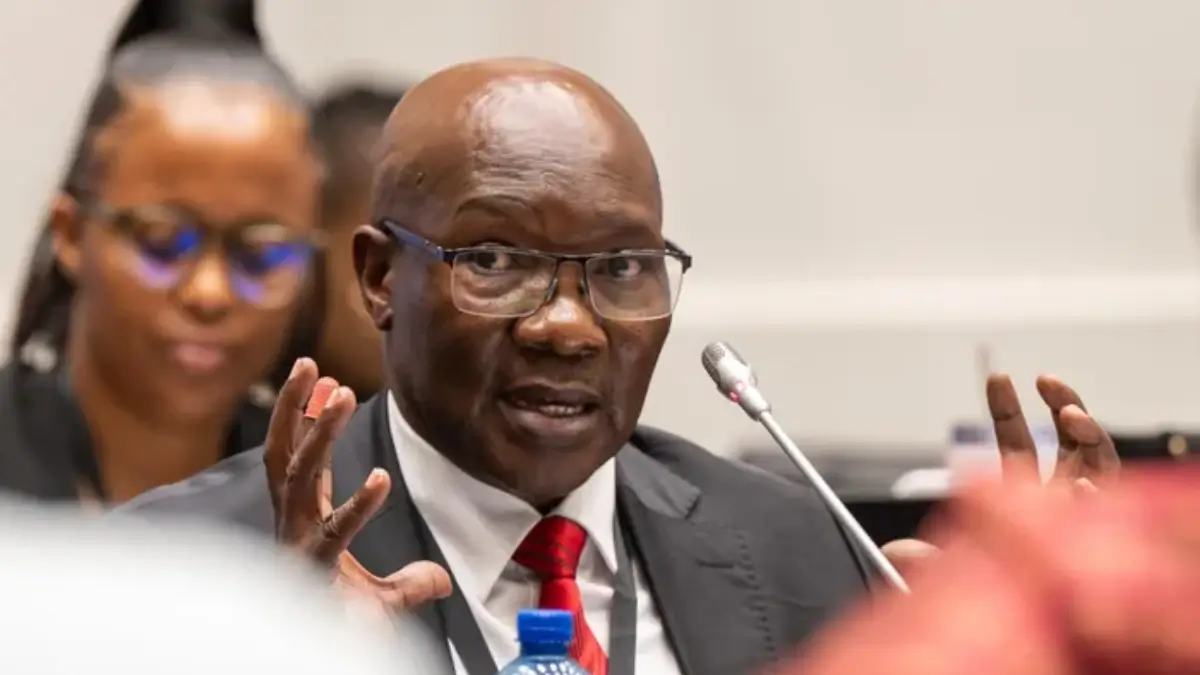
Gauteng, South Africa’s economic heartland, found itself at the centre of a national reckoning this week after explosive testimony by the head of Crime Intelligence, Dumisani Khumalo. Appearing before Parliament, Khumalo alleged that based on threat and risk assessments, “almost the whole of SAPS in Gauteng is working for the cartel”, a statement that sent shockwaves through the criminal justice system and communities already grappling with high crime levels.
The testimony was delivered to Parliament’s ad hoc committee probing allegations of corruption, political interference, and sabotage within the South African Police Service. For many Gauteng residents, Khumalo’s words echoed long-held fears that organised crime has embedded itself deep within law enforcement, eroding public confidence and enabling violent syndicates to operate with impunity.
ALSO READ: EFF Steps In as Parents Struggle with Gauteng School Placements – Watch
Parliament Hears Allegations of Deep Cartel Infiltration
Khumalo’s appearance before Parliament was not a routine briefing. It formed part of hearings investigating claims that a powerful organised crime network, often referred to as the “Big Five cartel”, has infiltrated law enforcement, politics, and private security structures.
Speaking under oath, Khumalo stated that a previous threat analysis revealed extensive collusion between police officers in Gauteng and criminal syndicates. According to him, some SAPS members allegedly protect cartel figures in exchange for payment, effectively turning policing into what he described as “a career within a career”.
“What makes it more difficult these days, especially within SAPS, is that there are syndicate members within our ranks,” Khumalo told the committee, adding that protection for a fee had become a mechanism to sustain and shield criminal operations.
High Profile Cases at the Centre of the Storm
Khumalo’s testimony drew heavily on two high-profile investigations involving alleged cartel-linked figures Katiso Molefe, also known as “KT”, and Vusimuzi Matlala, often referred to as “Cat”. Both men face serious criminal accusations related to murder and attempted murder, although they have not been formally charged as members of the so-called Big Five cartel.
In December 2024, police operations aimed at arresting Molefe and questioning Matlala required assistance from KwaZulu-Natal’s Political Killings Task Team. Khumalo, who project-managed this support, alleged that interference occurred during the Gauteng operation, undermining efforts to act against suspected cartel figures.
He further alleged that some of this interference may have originated from senior levels within SAPS, including the then head of the National Organised Crime Unit, Richard Shibiri. Khumalo told Parliament that investigations into these allegations were underway.
Political Proximity and Power Networks
One of the most troubling aspects of Khumalo’s testimony was the alleged proximity between cartel figures and political power. He told MPs that syndicates thrive because of their close relationships with politicians, law enforcement officers, and business leaders.
“Key to any syndicate’s survival is proximity and relationships with politicians, law enforcement officers, and business leaders,” Khumalo said. “That allows syndicates access to sensitive information, investigation processes, and the ability to manipulate or obstruct legal proceedings.”
The name of the sidelined police minister, Senzo Mchunu, surfaced repeatedly during the hearings. Khumalo testified that during the Molefe operation, questions arose about whether officers were aware of Molefe’s alleged friendship with the minister. In a separate incident, Matlala was allegedly planning to meet Mchunu when police raided his home.
Mchunu has denied allegations that Matlala funded his political ambitions and has previously stated that his actions as minister were taken in good faith. However, Khumalo suggested that a controversial directive issued by Mchunu in December 2024 to disband the Political Killings Task Team may have been based on what he called “mistaken identity”.
How Cartels Recruit and Operate
In rare detail, Khumalo outlined what he described as the criteria for joining organised crime cartels. According to his testimony, prospective members must demonstrate a long criminal track record without significant punishment, own multiple companies locally and abroad to facilitate money laundering, and often hold dual citizenship to enable cross-border movement.
Access to firearms, Khumalo said, was frequently achieved through private security companies, an allegation that casts further scrutiny on the blurred lines between legitimate security businesses and organised crime.
These revelations painted a picture of highly sophisticated criminal enterprises that operate not on the margins, but within the structures meant to combat them.
Public Trust and the Cost to Gauteng Communities
For Gauteng residents, the implications of Khumalo’s testimony go beyond political scandal. The province continues to battle violent crime, including murders, kidnappings, and armed robberies. Allegations that police officers may be complicit in protecting criminals deepen public mistrust and raise urgent questions about accountability.
Civil society organisations have long warned that corruption within SAPS undermines crime-fighting efforts and places ordinary citizens at risk. Khumalo’s statements, delivered in a parliamentary forum, have now amplified those concerns to the highest levels of government.
Misinformation, Resistance, and Internal Battles
Khumalo also described the resistance he faced after being appointed head of Crime Intelligence in late 2022. According to him, efforts to clean up the unit, including redistributing resources and tightening controls over informant payments, triggered misinformation campaigns aimed at discrediting him.
He cited false narratives circulated in media and online spaces, including claims that Crime Intelligence vehicles were unused and that informers were underpaid. Khumalo suggested these narratives were designed to derail reforms and protect entrenched interests.
His own arrest in June last year, alongside six colleagues over an allegedly irregular appointment, was also raised. Khumalo and his co-accused denied the allegations, and he later returned to his post, describing the arrest as part of a broader attempt to obstruct sensitive investigations.
Why This Moment Matters
Khumalo’s testimony has placed unprecedented pressure on Parliament, SAPS leadership, and the executive to confront allegations of systemic corruption. For Gauteng, the stakes are particularly high. As the country’s economic engine, the province relies on safety, stability, and credible institutions to attract investment and support livelihoods.
The ad hoc committee’s work, alongside parallel inquiries such as the Madlanga Commission, now represents a critical opportunity to restore integrity within law enforcement and to ensure that those tasked with protecting communities are held to account.
A Call for Action and Accountability
As hearings continue, South Africans will be watching closely to see whether Khumalo’s claims result in concrete action. Transparency, independent investigations, and visible consequences for wrongdoing will be essential to rebuild trust.
For Gauteng residents, this moment calls for active civic engagement. Communities, civil society groups, and watchdog organisations must continue to demand accountability, support whistleblowers, and insist on reforms that strengthen policing rather than weaken it.
The path forward will not be easy, but confronting uncomfortable truths is a necessary step towards safer streets and a justice system that serves the people it was created to protect.