
Gauteng job seekers face increasing threats from job scams in 2026. With unemployment at 31.9% nationally and competition in urban areas like Johannesburg and Pretoria growing, scammers are exploiting desperation. Understanding these scams is crucial to protecting your money, data, and safety.
What Are Common Job Scams?
Common job scams are fraudulent job offers designed to steal money or personal information. These scams mimic real opportunities but often include fake interviews, illegitimate fees, and false promises of employment.
Scammers typically use WhatsApp, Facebook, SMS, or cloned websites to lure victims. Thousands of fake job listings circulate monthly across South Africa.
Why Are Gauteng Job Seekers a Major Target?
Gauteng is the country’s economic hub. High migration rates and youth unemployment make job seekers here more vulnerable. Cities like Johannesburg and Pretoria have the highest online job ad traffic – a fact scammers exploit.
Gauteng receives over 300,000 job applications monthly, much of it through digital platforms.
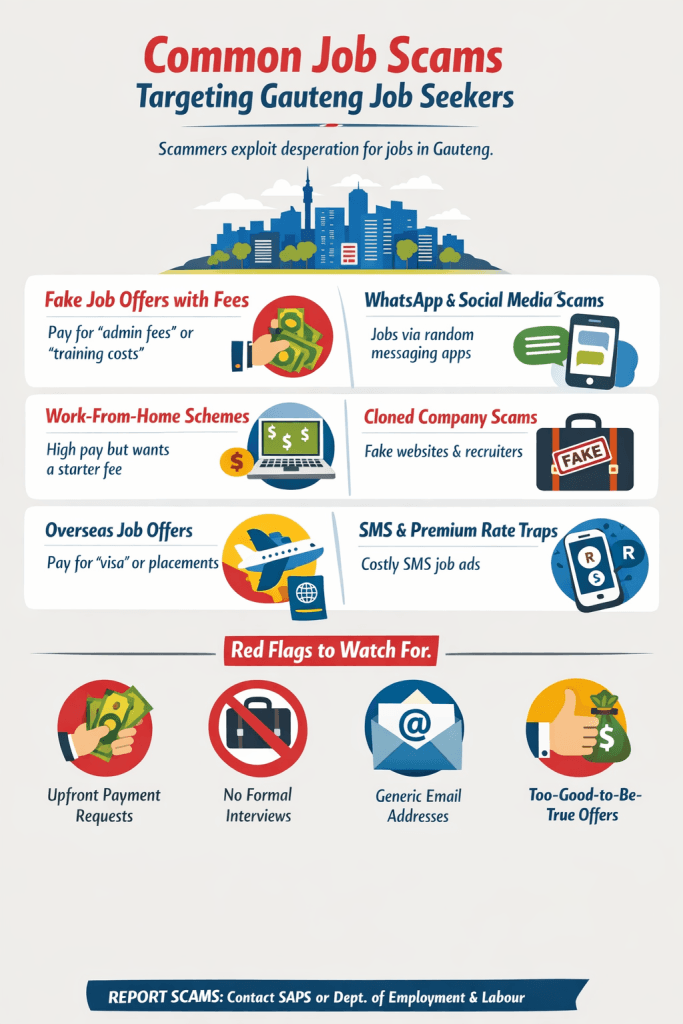
1. Advance Fee Scams (“Pay Before You Work”)
This is the most reported scam. Fraudsters offer a job and then demand a fee for admin, uniforms, or training.
Red flags:
- Requests for payment via eWallet or bank transfer
- No formal interview or contract
- Fake HR contact details
Important: No legal employer in South Africa can ask for a job application fee.
2. WhatsApp Recruitment Scams
Many scammers impersonate recruiters via WhatsApp. They may send unsolicited job offers or claim they got your CV from a “database”.
They avoid phone calls or formal emails, keeping the scam within chat apps.
Signs to watch for:
- No company email address
- No interview process
- Pressure to respond quickly
3. Fake Learnerships and Internships
Scammers post fake internships targeting youth. They use the names of legitimate companies or SETAs.
Applicants are told they’ve been “accepted” but must pay a registration or placement fee.
Watch out for:
- Promises of stipends
- No physical office location
- Untraceable bank accounts
Seta Reminder: SETAs never charge candidates to register.
4. Cloned Company Websites
Fraudsters duplicate legitimate company sites. They copy branding, logos, and even staff photos.
Victims apply via a cloned portal or receive fake emails that seem official.
Warning signs:
- Slight domain name changes (e.g., .net instead of .co.za)
- No listings on the real company’s LinkedIn
- Email addresses not matching the company domain
Always apply via verified portals like PNet or Careers24.
5. Work-from-Home and Online Task Scams
These scams offer unrealistic pay for remote work. Often disguised as data entry or content moderation jobs.
Victims are asked to pay for a “starter pack” or “registration”.
Indicators:
- No clear job description
- Poor grammar or formatting
- Requests for payment upfront
Refer to CheckJobScam.co.za for scam verification.
6. Overseas Job Offers (Especially UK/UAE)
Gauteng job seekers often get fake offers for domestic or hospitality work abroad. Scammers promise visa assistance after an upfront payment.
Risks:
- Human trafficking
- Visa fraud
- Financial loss
Confirm overseas work offers through DIRCO or the Department of Employment and Labour.
7. Premium SMS and Airtime Fraud
Some fake recruiters send SMSes asking job seekers to reply to a number. The number is linked to a premium-rate service, deducting airtime without your consent.
Signs of this scam:
- 5-digit reply numbers
- No company name in the message
- Vague job descriptions
Avoid applying for jobs via SMS unless it’s a verified company platform.
8. Identity Theft Through Job Applications
Job seekers often upload ID copies, bank details, or proof of address with job applications. Scammers use this to open accounts or commit fraud.
To stay safe:
- Never send sensitive info unless verified
- Watermark ID copies
- Confirm the recruiter’s legitimacy
Visit SAFPS if you suspect identity theft.
ALSO READ: Top Job-Hunting Tips for January 2026 Success
9. Fake Training Centres
These are physical or online centres that claim to offer accredited courses with guaranteed placement. They advertise on Facebook and use testimonials from fake students.
Victims pay R500–R2000 for courses that never happen.
How to verify:
- Check if they are listed with QCTO or DHET
- Request their accreditation certificate
- Look for a brick-and-mortar address
10. Fake Government or NGO Jobs
These scams use trusted logos from departments or NGOs. Victims are told they’ve secured a job with an NGO or government programme and must pay for screening or placement.
Tip: Always check listings on the official Gov.za portal.
Tips to Avoid Job Scams in Gauteng
- Don’t pay for jobs: No legitimate employer charges to apply.
- Use trusted platforms: Stick to LinkedIn, PNet, Careers24.
- Verify the recruiter: Call the company directly.
- Check URLs carefully: Watch for spelling errors or strange domain names.
- Trust your instincts: If it sounds too good to be true, it probably is.
Frequently Asked Questions (FAQ)
What should I do if I was scammed?
Report it to SAPS and lodge a case with the Cybercrime Division. Also, notify your bank and credit bureau.
Can a company ask for a uniform fee?
Legally, no company should ask for any fee before hiring.
Where can I report fake jobs?
You can report them to the Department of Employment and Labour, SAFPS.
Common job scams are growing in scale and sophistication in Gauteng. Job seekers must remain alert and proactive. By understanding how these scams operate, you can protect your time, money, and identity.
Stay informed. Share this article. Help protect fellow Gauteng job seekers from falling victim to employment fraud.