Thousands of South Africans apply for government jobs each month, yet many applications are rejected before shortlisting begins. In most cases, disqualification happens because of incomplete Z83 forms, missing signatures, incorrect reference numbers, or failure to follow submission instructions. For Gauteng jobseekers competing for limited posts in provincial and national departments, small administrative errors can immediately remove an application from consideration.
The Department of Public Service and Administration requires strict compliance with application rules. Official Z83 completion guidelines state that incomplete or unsigned forms may result in automatic disqualification. Understanding the checklist before applying is therefore essential in 2026.
Below is a structured, practical government job application checklist designed to help applicants submit complete, compliant applications.
ALSO READ: How Long Does It Take for A UIF Claim Payout in 2026
Documents Required Before Applying
Before submitting any public sector application, ensure the following documents are prepared:
Mandatory at application stage (unless stated otherwise in the advert):
- Completed and signed the new Z83 form
- Detailed, updated CV
Many departments now state clearly that certified copies of qualifications and ID documents should only be submitted by shortlisted candidates. Always read the advert carefully to confirm.
When requested by the advert, you may need:
- Certified copy of South African ID
- Certified copies of qualifications
- Driver’s licence (if required)
- Proof of registration with a professional body (if applicable)
Failure to complete all sections of the Z83 may prevent the application from progressing, even if the information appears on the CV.
CV Format for Public Sector Roles
Government CVs differ slightly from private sector CVs. They must be detailed and aligned strictly with the job advert.
Recommended Structure
1. Personal Details
- Full names (as per ID)
- ID number
- Contact details
- Citizenship
2. Qualifications (Highest to Lowest)
- Qualification name
- Institution
- Year completed
3. Work Experience
- Employer name
- Position held
- Dates of employment
- Key responsibilities aligned to the advertised post
4. Training and Short Courses
- Computer literacy
- First Aid
- Customer service
- Any relevant accredited training
5. References
- Minimum of three referees
- Name
- Position
- Contact number
- Relationship to you
Avoid decorative templates. Use a clear, professional layout in 2 to 4 pages.
How to Complete Job Posts and References on the Z83
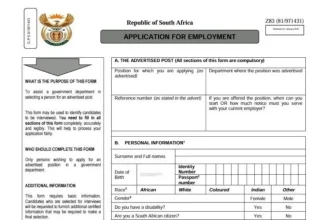
One of the most common reasons for rejection is incorrectly completing Section A of the Z83 form.
Applicants must:
- Write the exact job title as it appears in the advert
- Include the correct reference number
- State the full department name
- Complete one Z83 per advertised post
Never shorten or reword the job title.
Personal Information Section
All fields must be completed. If a question does not apply, write “N/A” rather than leaving it blank.
Include:
- Full names
- ID number
- Citizenship
- Disability status
- Criminal record declaration (if applicable)
Declaration Section
Failure to sign and date the form leads to immediate disqualification.
You must:
- Sign
- Date
- Initial each page where required
Submission Channel Checklist
Government departments increasingly use online portals.
1. Online Portal Submission
Common in Gauteng provincial departments.
Checklist:
- Create an account
- Upload Z83 and CV in PDF format
- Confirm submission
- Save or screenshot confirmation
If the advert states “online applications only”, do not email or hand-deliver documents.
2. Email Submission (Only if allowed)
If email applications are accepted:
- Use a clear subject line:
Application: Post Title – Reference Number – Your Name - Attach signed Z83 and CV in PDF
- Keep attachments readable and under size limits
Late applications are not considered.
Post-Submission Follow-Up Steps
After submission:
- Record the closing date
- Keep a copy of the Z83 and CV submitted
- Monitor your phone and email regularly
- Prepare original certified documents in case of shortlisting
Shortlisting timelines vary. Some departments take weeks or months before contacting candidates.
What This Means for Gauteng Residents
Gauteng consistently records some of the highest volumes of public sector applications in South Africa. Departments such as Health, Education, Transport, and Social Development regularly advertise administrative, general worker, driver, and entry-level posts.
Competition is high. A technically incorrect application reduces the chances of progressing beyond screening. Screening committees assess whether applicants meet minimum requirements before reviewing detailed experience.
For Gauteng residents, strict compliance with documentation and submission rules is therefore not optional. It is foundational.
Common Application Mistakes to Avoid
Avoid:
- Using an outdated Z83 form
- Leaving sections blank
- Forgetting to sign the declaration
- Incorrect reference number
- Applying after the closing date
- Sending only a CV without Z83
- Submitting to the wrong email or portal
These errors lead to immediate exclusion during screening.
Frequently Asked Questions
What documents are needed for government jobs?
At a minimum, a completed and signed Z83 form and a detailed CV are required. Certified copies are usually requested only from shortlisted candidates, unless the advert states otherwise.
How should a government CV be formatted?
It should be clear, detailed, and aligned with the advertised post. Include full employment history, qualifications, training, and at least three referees. Avoid decorative templates.
Can I apply without a certified ID copy?
Yes, in many cases. Most current government adverts request certified documents only after shortlisting. Always follow the specific advert instructions.
What happens if I forget to sign the Z83?
An unsigned application may be disqualified immediately.
What Happens Next in the Hiring Process
After the closing date:
- HR screens applications for compliance and minimum requirements.
- A shortlisting committee evaluates eligible candidates.
- Shortlisted applicants are contacted for interviews.
- Verification of qualifications and background checks occur before appointment.
The screening phase is administrative but decisive. Applications that do not meet the technical requirements will not proceed.
As departments continue digitising recruitment in 2026, adherence to instructions and careful documentation remain central to successful public sector applications.