
The 2025 Matric Results have ignited a national debate about how South Africa measures success in basic education. While the Department of Basic Education announced a record-breaking official matric pass rate of 88%, ActionSA argues that the real picture looks far less positive. Using cohort analysis, the party claims the true matric pass rate sits at only 57.7%.
This dispute highlights long-standing concerns about learner dropouts, systemic weaknesses, and how performance statistics shape public perception.
Official Matric Results for 2025 Explained
Basic Education Minister Siviwe Gwarube announced the 2025 National Senior Certificate (NSC) results, confirming:
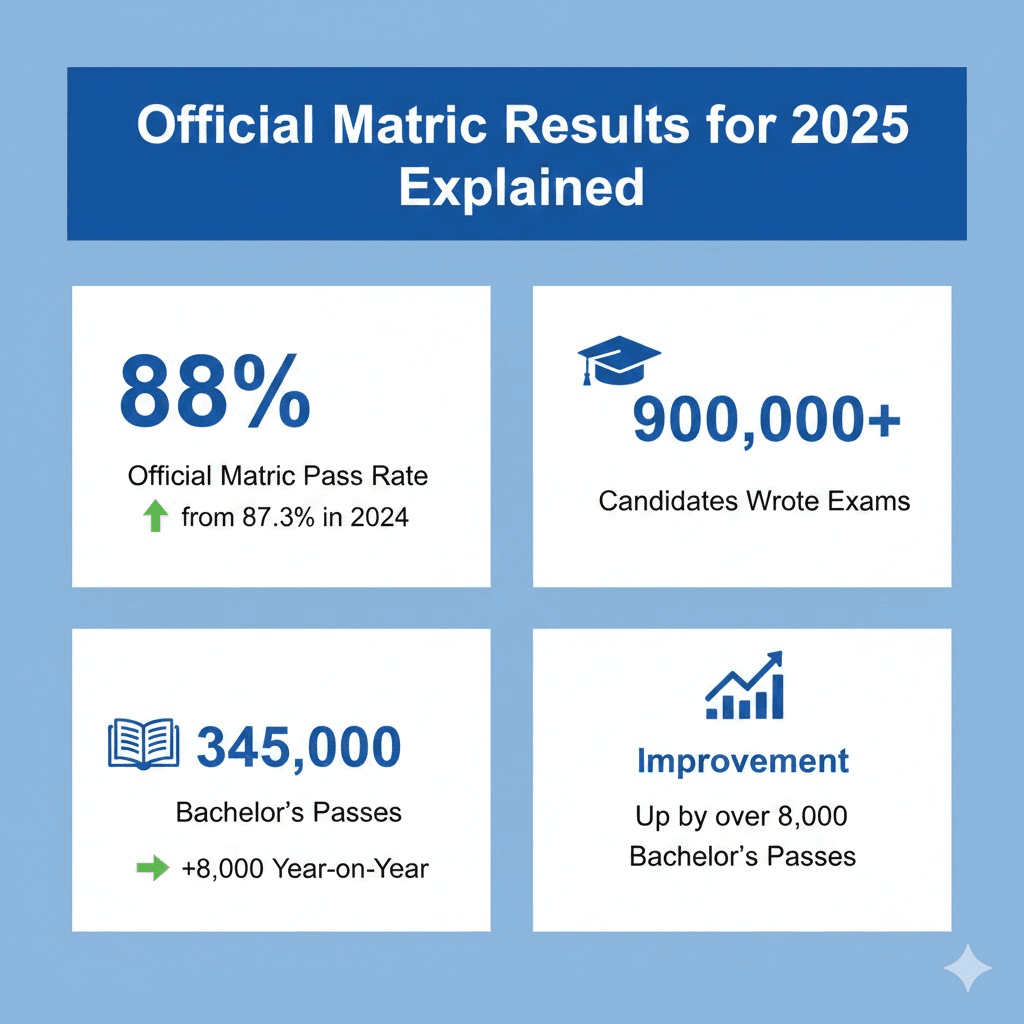
According to the Department of Basic Education, these results reflect curriculum recovery efforts and targeted learner support.
“These outcomes demonstrate resilience and progress across the system,” Gwarube said during the official release.
ActionSA’s Claim: The “Real” Matric Pass Rate Is 57.7%
ActionSA disputes the headline Matric Results, arguing that the official pass rate excludes thousands of learners who never reached Grade 12.
ActionSA spokesperson Matthew George explained that the party applied the internationally accepted cohort methodology. This approach tracks how many learners who entered Grade 10 eventually passed matric.
Key figures from ActionSA’s analysis:
- 1.14 million learners entered Grade 10 in 2023
- Only a portion completed matric in 2025
- The effective completion rate drops to 57.7%
“This gap reflects a system that continues to lose pupils through dropout, repetition, and disengagement long before they reach the examination hall,” George said.
Why the Matric Pass Rate Calculation Matters
The debate over the Matric Pass Rate centres on the denominator used in calculations.
- Official rate counts only learners who wrote matric
- Cohort rate includes all learners who started the senior phase
- Dropouts between Grades 10 and 12 remain invisible in headline results
Education analysts have long warned that relying solely on exam participation creates an incomplete picture of system performance.
Political Reactions to the 2025 Matric Results
Several political parties weighed in on the Matric Results, reflecting both praise and concern.
ANC: Focus on Progress and Bachelor Passes
The ANC described the results as a milestone and highlighted improved access to higher education.
“The increase in bachelor’s passes shows improving quality and future leadership potential,” said ANC spokesperson Mahlengi Bengu.
DA: Throughput Remains a Serious Challenge
The Democratic Alliance welcomed the results but echoed concerns about learner retention.
“The drop-off between Grade 10 and Grade 12 remains one of the biggest weaknesses in the system,” said DA education spokesperson Nazley Sharif.
EFF and MK Party: Maths and Inequality Concerns
The EFF flagged a decline in the mathematics pass rate from 69% in 2024 to 64% in 2025, warning of economic consequences. The MK Party stressed that education challenges mirror broader inequality.
What Happens to Learners Who Do Not Pass?
The United Democratic Movement (UDM) focused on learners who fell short.
“No young person should be abandoned at the point of disappointment,” said UDM acting secretary-general Zandile Phiri.
The party called for:
- Expanded second-chance matric programmes
- Greater access to TVET colleges
- Community education and skills pathways
Key Insights From the Matric Results Debate
- The official matric pass rate improved, but excludes dropouts
- Cohort analysis reveals deeper structural challenges
- Maths and science remain pressure points
- Post-school pathways require urgent expansion
Frequently Asked Questions on Matric Results
What is the official matric pass rate for 2025?
The Department of Basic Education announced an official pass rate of 88%.
Why does ActionSA say the real matric pass rate is lower?
ActionSA uses cohort analysis, tracking learners from Grade 10 to matric, which results in a 57.7% completion rate.
Does a higher pass rate mean the system is improving?
Higher pass rates show progress among exam writers, but dropout rates still weaken overall system outcomes.