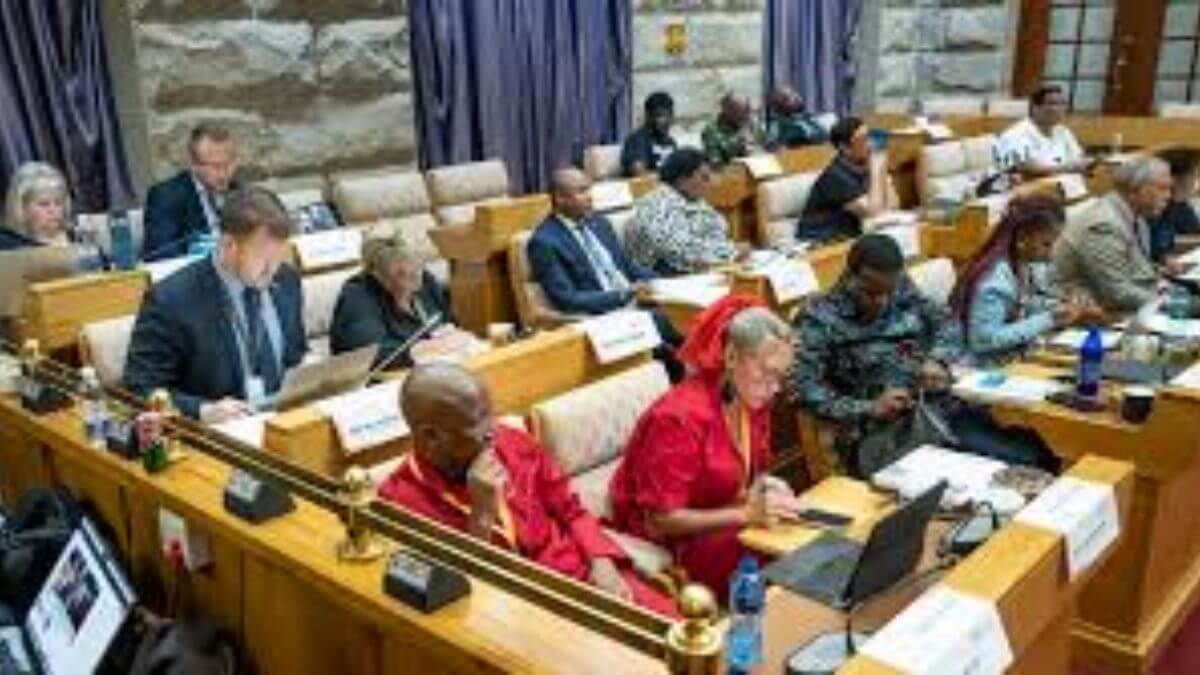
The Ad Hoc Committee investigating allegations made by KwaZulu-Natal Police Commissioner Nhlanhla Mkhwanazi descended into chaos during a heated parliamentary meeting. The clash centred on whether members of the judiciary should testify before the committee. The session exposed deep political divisions and raised fresh questions about accountability, evidence, and the scope of parliamentary oversight.
The committee met virtually on Wednesday, 7 January 2026. This marked its first sitting of the year after Parliament’s constituency period.
Ad Hoc Committee Receives Final Extension Until February 2026
The Ad Hoc Committee received its final extension to complete its work. Chairperson and ANC MP Soviet Lekganyane confirmed that National Assembly Speaker Thoko Didiza approved the extension.
The committee deadline shifted several times:
- Original deadline: 31 October 2025
- First extension: 28 November 2025
- Final deadline: 20 February 2026
Lekganyane stressed that this extension was final. He said hearings should conclude by 6 February 2026. This timeline allows enough time to prepare the final report.
He also confirmed that:
- Anyone implicated in the final report will receive notice.
- Affected parties will receive sections relevant to them.
- This process follows the principle of natural justice.
Key Witnesses Still Expected to Testify
The committee has heard testimony from senior political and law enforcement figures since October 2025. These include:
- Nhlanhla Mkhwanazi
- NDPP Shamila Batohi
- Police Minister Senzo Mchunu
- National Police Commissioner Fannie Masemola
- Former minister Bheki Cele
Several high-profile witnesses remain on the schedule.
Upcoming Witnesses Include:
- Former acting police commissioner Khomotso Phahlane
- Crime Intelligence head Dumisani Khumalo
- Former IPID head Robert McBride
- Forensic investigator Paul O’Sullivan
- Alleged political fixer Oupa Mogotsi
- EMPD deputy chief Julius Mkhwanazi
Evidence leader Norman Arendse noted security concerns raised by O’Sullivan. He also confirmed that Mkhwanazi will return for further testimony.
Public Submissions Raise Concerns but Lack Direct Evidence
Content adviser Nicolette van Zyl-Gous briefed the committee on public submissions. Most submissions failed to present probative evidence linked directly to the allegations.
She highlighted several findings:
- Three submissions were anonymous.
- One anonymous submission carried high probative value.
- One relied heavily on hearsay.
- One related to a political killing and alleged intimidation tied to anti-corruption work.
The committee will compile a public participation report. This report will stand separate from the final findings.
Judicial Testimony Debate Triggers Disorder
Tensions flared when MK Party MPs raised concerns about the absence of judicial witnesses. MP Sibonelo Nomvalo argued that the focus leaned too heavily on law enforcement.
MK Party MP David Skosana escalated the debate. He referenced public complaints about judges and echoed past public remarks made by EFF leader Julius Malema.
Malema pushed back strongly. He insisted that no evidence currently implicates any judge. He challenged Skosana to name a judge directly.
His remarks included:
- Demands for specific names.
- Accusations of grandstanding.
- A warning against reckless claims.
Chairperson Lekganyane attempted to restore order. He reminded members that only evidence-based implications warrant testimony requests. Despite interventions, the exchange descended into shouting. Members later issued apologies, but the damage to decorum remained clear.
Why the Ad Hoc Committee Matters
The Ad Hoc Committee plays a critical oversight role. Its work influences public trust in policing, prosecution, and governance.
Key issues at stake include:
- Allegations of political interference
- Integrity within law enforcement
- Confidence in judicial independence
- Parliamentary accountability
South Africa’s Constitution demands transparency and fairness. Parliamentary committees remain central to that mandate.
Frequently Asked Questions
What is the Ad Hoc Committee investigating?
The committee is investigating allegations made by KZN Police Commissioner Nhlanhla Mkhwanazi against senior officials.
Has any judge been formally implicated?
No judge has faced formal implication supported by evidence at this stage.
When will the committee finish its work?
The committee must conclude by 20 February 2026.
Will the final report be public?
Yes. Parliament will table the final report for public access.
Why did the meeting become chaotic?
Disagreements over judicial testimony, political tensions, and lack of evidence sparked the disorder.
What Happens Next
The committee resumes hearings in mid-January. Remaining witnesses will testify under tight timelines. The final report will shape political and legal accountability outcomes. The Ad Hoc Committee now faces pressure to restore credibility, maintain discipline, and deliver findings grounded in evidence.