Gauteng School Fees remain a major concern for families in 2026. Parents face rising costs in both public and private schools. At the same time, provincial funding pressures are shifting more responsibility onto households. This guide compares public vs private school fees, outlines hidden costs, and explains funding options in clear terms.
Public school fees are set by School Governing Bodies under the South African Schools Act. Parents may apply for full or partial fee exemptions if they qualify.
Meanwhile, independent schools set their own fees and do not receive the same operational subsidies as public schools.
Gauteng School Fees: Public vs Private Fees
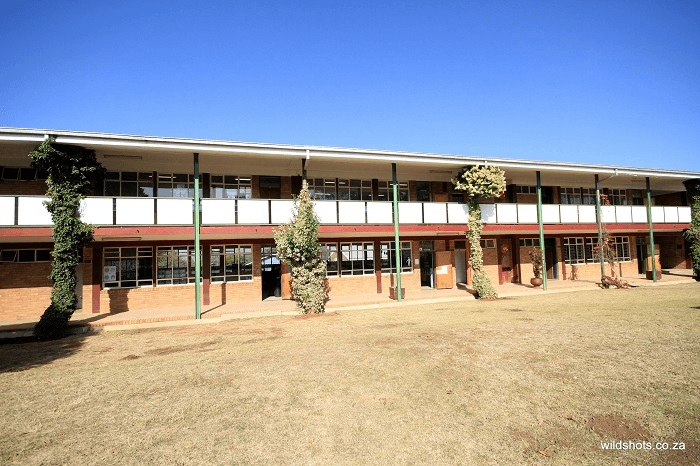
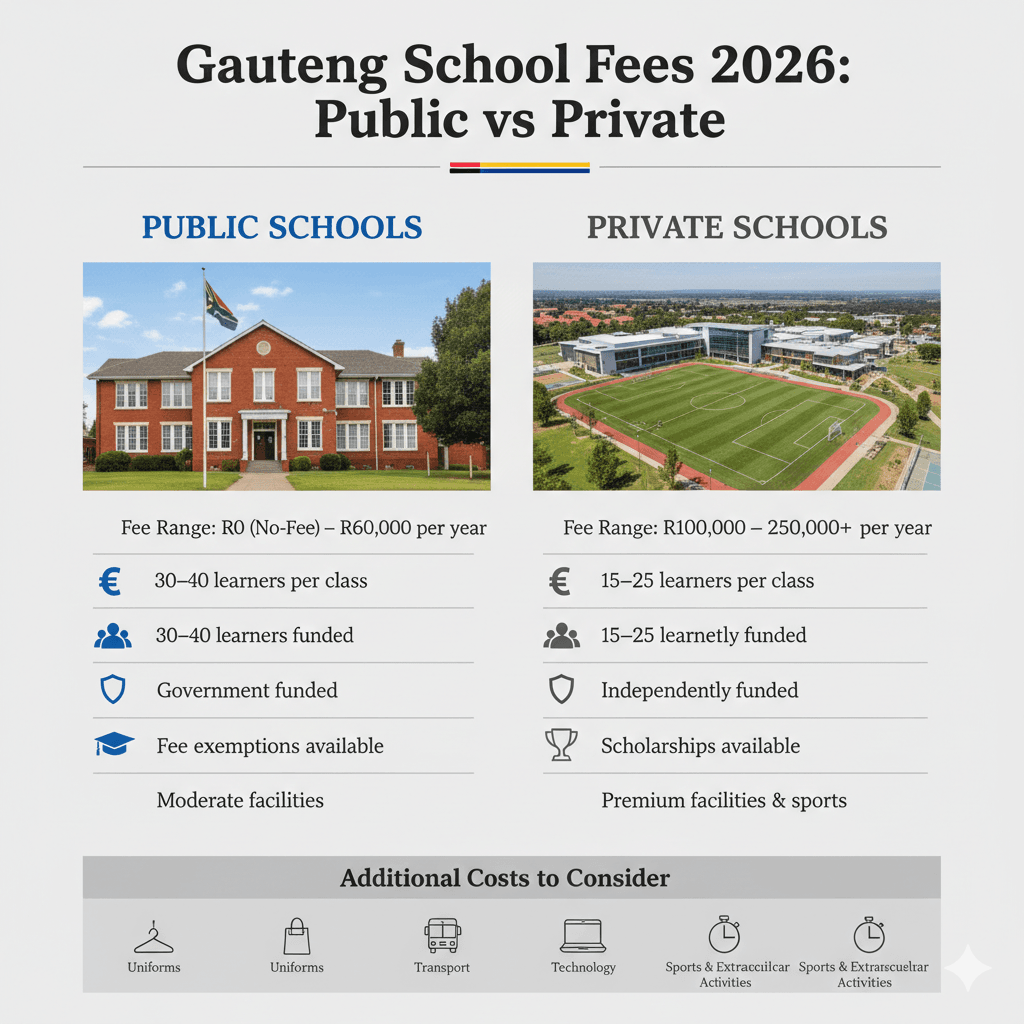
Public vs private school fees differ sharply in 2026.
Public Schools (Fee-Paying)
In Gauteng, fee-paying public schools, mainly Quintile 4 and 5, charge between:
- R20,000 and R60,000 per year (day schools)
- Top-performing public high schools may exceed R70,000 annually
However, Gauteng’s Quintile 5 schools face subsidy reductions in 2026. Provincial subsidies dropped from about R879 to R315 per learner in affected schools.
ALSO READ: Gauteng Education Closes 71 Illegal Schools in the Province
“This decision is placing enormous financial pressure on public schools,” said Deon Lerm of FEDSAS.
This shift may lead to higher school fees or reduced services.
No-Fee Public Schools
Gauteng still maintains hundreds of no-fee schools. These fall under Quintiles 1–3.
- Annual tuition: R0
- Funded directly by the state
The official 2026 no-fee school list is available from the DBE.
Private Schools
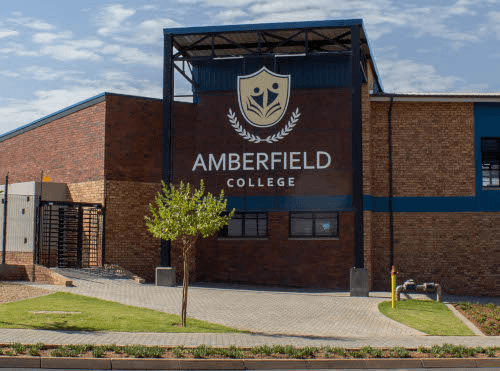
Private school fees vary widely. In Gauteng:
- Mid-range private schools: R80,000 – R150,000 per year
- Elite schools: R200,000 – R300,000+ per year
- Boarding can exceed R350,000 annually
Private school fees increased between 5% and 8% in 2026, outpacing inflation.
William Bester, Chairperson of NAISA, noted:
“Parents are struggling to pay fees, and we are seeing an increase in defaulting parents.”
Why Gauteng School Cost Is Rising in 2026
Several factors drive increases:
- Provincial budget constraints
- Rising staff salaries
- Municipal tariff hikes
- Security and infrastructure upgrades
The Gauteng Department of Education (GDE) confirmed continued financial pressures despite a multi-billion rand education budget allocation.
Public schools must balance affordability with quality. Private schools must cover full operational costs independently.
Area-Based Fee Differences
Location strongly affects Gauteng school cost.
Northern Suburbs (Sandton, Midrand, Centurion)
- Public schools: R40,000–R70,000
- Private schools: R150,000+
East Rand (Benoni, Boksburg)
- Public schools: R25,000–R45,000
- Private schools: R80,000–R140,000
Soweto & Tembisa
- Many no-fee public schools
- Private schools generally below northern suburb averages
Affluent areas typically show higher fees due to facilities and demand.
Extra Costs Parents Often Miss
Tuition is only part of the picture. Parents should budget for:
- Registration fees (R500–R10,000 once-off)
- Uniforms (R2,000–R6,000 annually)
- Textbooks and stationery
- Tablets or laptops
- Sports and cultural tours
- Aftercare services
For private schools, extracurricular activities often carry additional charges.
Therefore, public vs private school fees comparisons must include total annual costs.
Scholarship and Bursary Paths
Parents have several options.
Public School Fee Exemptions
Under DBE policy:
- Parents earning below a certain threshold qualify for full or partial exemption.
- Schools cannot withhold reports due to unpaid fees if exemptions apply.
DBE states:
“Parents who cannot afford to pay school fees must apply for conditional, partial or full exemption.”
Private School Bursaries
Many private schools offer:
- Merit scholarships
- Means-tested bursaries
- Corporate-sponsored funding
However, places are limited and competitive.
Academic Outcomes and Value Comparison
Fees do not always equal performance. However:
- Many top-performing Gauteng matric results come from both leading public and private schools.
- Public schools often rely on strong governing bodies.
- Private schools invest heavily in smaller class sizes.
Parents should assess outcomes, not just price.
Infrastructure and Class Size Differences
Public schools:
- Class sizes: 30–40 learners
- Shared facilities common
Private schools:
- Class sizes: 15–25 learners
- Modern tech integration
- Enhanced security
These factors influence Gauteng school cost differences.
Budget Planning Template for Parents
Use this basic structure:
1. Annual Tuition
2. Registration Fees
3. Uniforms
4. Transport
5. Extracurricular Activities
6. Technology Requirements
7. Contingency (10%)
Add all expenses before comparing schools. This ensures realistic planning.
Government Policy and Oversight
The South African Schools Act regulates public school fee decisions. School Governing Bodies must vote annually on fee increases.
Private schools operate under the Independent Schools Association framework. However, they must register with provincial authorities.
The DBE and GDE oversee compliance and standards.
Economic Outlook and 2027 Projections
Education inflation continues to exceed CPI. Analysts expect moderate increases in 2027 due to:
- Salary adjustments
- Infrastructure demands
- Electricity and water costs
However, further subsidy cuts could accelerate public school fee growth.
FAQs
What is the average school fee in Gauteng?
In 2026:
Public fee-paying schools: R20,000–R60,000 annually
Private schools: R100,000–R250,000+ annually
No-fee schools charge zero tuition.
Are public schools cheaper overall?
Yes, public schools are generally cheaper. However, top public schools can approach lower-tier private fees. Total cost depends on extras.
What extra costs should parents budget for?
Parents should include uniforms, registration, technology, sports, and transport. These can add 15–30% to tuition costs.
Public vs Private in 2026
Gauteng School Fees in 2026 show a widening gap between public and private education. Public schools remain more affordable overall. Yet subsidy cuts create pressure in higher quintiles. Private schools offer smaller classes and premium facilities, but at a steep price.
Therefore, parents should compare total cost, academic results, and long-term value. Financial planning remains essential in Gauteng’s evolving education landscape.