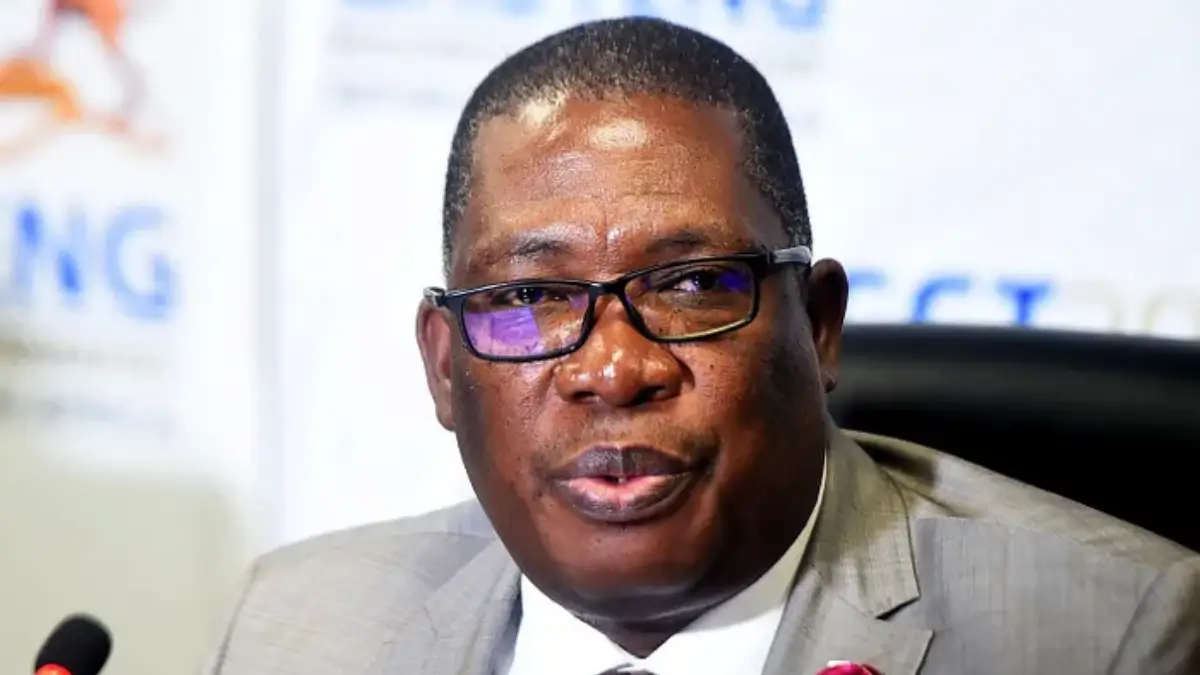
Gauteng Premier Panyaza Lesufi has apologised after suggesting that residents affected by water outages could use hotel facilities to bathe, a comment that sparked widespread backlash across the province. The remark was made during a media briefing on the ongoing Gauteng water crisis, where residents in parts of Johannesburg and surrounding municipalities continue to experience prolonged supply disruptions.
The incident has intensified public frustration at a time when thousands of households are relying on water tankers, communal taps, and stored reserves. Political analysts say the comment risks deepening perceptions of inequality and weakening public trust in leadership during a service delivery crisis.
ALSO READ: Majodina Urges Gauteng Residents to Stay Patient Amid Ongoing Water Crisis
What Panyaza Lesufi Said During the Media Briefing
During the briefing, Lesufi attempted to emphasise that government leaders were not insulated from the crisis.
He stated that he and his family also experience water cuts and that, in some instances, he had gone to a hotel to bathe before attending official commitments.
He further said leaders “suffer the same pain” as residents and suggested that the water crisis was “almost fixed”.
However, the reference to hotel facilities drew criticism from residents who have endured days or weeks without a reliable water supply.
Public Reaction Across Gauteng
For many residents in Johannesburg, Ekurhuleni, and parts of the West Rand, the comment was interpreted as tone-deaf in the context of severe service delivery disruptions.
Communities have reported:
- Long queues at water tankers
- Inconsistent municipal communication
- Dry taps lasting several days
- Reliance on stored rainwater and buckets
Social media platforms reflected widespread anger, with many users arguing that hotel access is not a realistic option for the majority of affected households.
Political Analysts Warn of Long-Term Damage
Political analyst Ntsikelelo Breakfast said that remarks made during crisis periods carry heightened consequences.
“The damage is done,” Breakfast said, adding that leadership during times of public hardship requires careful communication.
He noted that Gauteng voters are already navigating concerns related to unemployment, municipal collapse, infrastructure backlogs, and crime.
Another analyst, Gakwi Mashego, argued that the controversy reflects deeper governance concerns rather than a single remark.
He said the water crisis is fundamentally about management and infrastructure planning rather than absolute water scarcity.
According to Mashego, deteriorating river systems, insufficient infrastructure investment and rapid urban population growth have strained Gauteng’s water systems over time.
The Broader Water Crisis in Gauteng
The controversy emerges amid ongoing supply instability linked to:
- Ageing infrastructure
- Maintenance backlogs
- Pump station failures
- Rising demand from population growth
- Strain on bulk water systems
Municipalities have implemented rotational supply reductions and tanker deliveries in several areas.
The provincial government has stated that interventions are underway, including infrastructure upgrades and coordination with water utilities.
However, residents in affected communities continue to report inconsistent restoration timelines.
Leadership and Crisis Communication
Theo Neethling, head of political studies and governance at the University of the Free State, said leadership communication during service delivery crises requires empathy and accountability.
In a context where residents queue at communal taps or depend on emergency tankers, remarks that reference alternative coping mechanisms may reinforce perceptions of structural inequality, he said.
Neethling noted that such perceptions can increase public cynicism and disengagement, particularly in politically contested provinces such as Gauteng.
What This Means for Gauteng Residents
For Gauteng residents, the controversy underscores growing frustration around water reliability and governance accountability.
Beyond the political fallout, the core issue remains:
- Households without consistent access to running water
- Economic costs of buying bottled water
- Health and hygiene concerns
- Disruptions to schooling and home-based work
The incident may influence public expectations around transparency and communication as the water crisis continues.
It also places additional pressure on provincial leadership to provide clear timelines and measurable progress on infrastructure interventions.
Provincial Response and Apology
Following the backlash, Lesufi apologised for the remark, acknowledging that it had been poorly received.
The provincial government has reiterated its commitment to stabilising supply systems and addressing infrastructure failures.
Officials have stated that repair work and coordination efforts are ongoing, although detailed timelines for full system recovery remain limited.
Why Gauteng Is Politically Significant
Gauteng remains South Africa’s economic hub and one of its most politically contested provinces.
With coalition politics shaping governance outcomes in recent years, service delivery issues carry heightened electoral implications.
Analysts note that water instability — combined with electricity disruptions and infrastructure strain — can shape voter sentiment in metropolitan areas.
FAQ: Lesufi Hotel Shower Controversy
What did Lesufi say about hotels?
He said that in some instances, he had gone to a hotel to bathe during water outages before attending official commitments.
Has he apologised?
Yes. The Premier has issued an apology following public backlash.
Is the Gauteng water crisis ongoing?
Yes. Several areas continue to experience supply disruptions and tanker reliance.
What caused the water outages?
Officials cite infrastructure strain, maintenance backlogs and system pressure from growing demand.
Is there a timeline for full restoration?
Authorities have indicated that interventions are underway, but specific completion dates have not been confirmed.
What Happens Next
The political fallout is likely to continue as opposition parties and civic groups scrutinise the provincial government’s handling of the water crisis. Further briefings from provincial leadership are expected in the coming weeks.
The effectiveness of infrastructure repairs and communication strategies may determine whether the controversy remains a short-term communication error or evolves into a broader governance challenge.