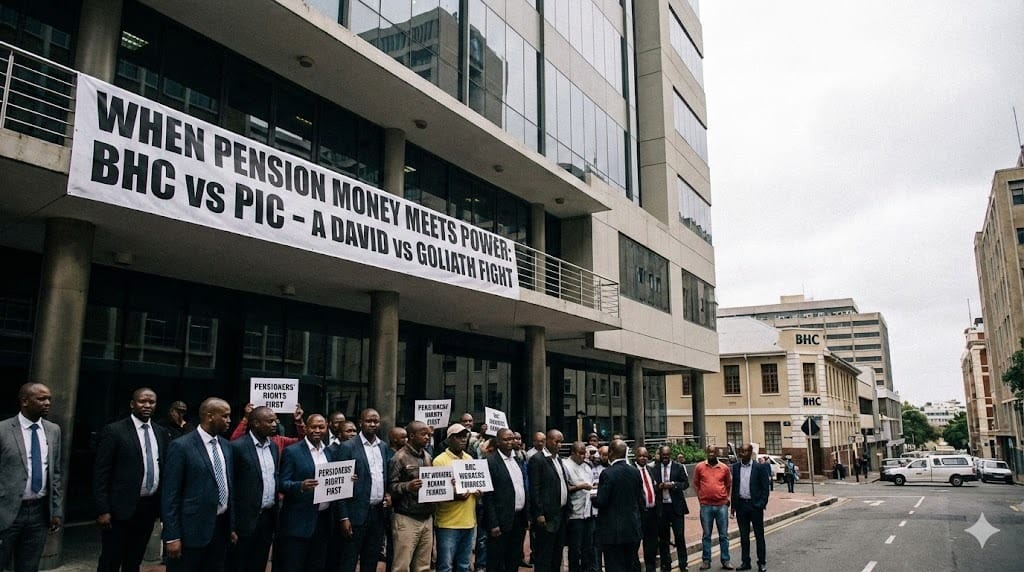
A press release landed on my desk this week that reads less like corporate paperwork and more like a warning flare.
A black-owned company, Bolatja Hlogo Consortium, says it has filed a formal misconduct and legal malpractice complaint with the Legal Practice Council, not against a random firm, but against heavyweight law firm Cliffe Dekker Hofmeyr (CDH) and the Public Investment Corporation (PIC) Head of Legal, Ms Lindiwe Dlamini.
And here’s the part that hits hard: BHC claims this conduct has “persistently prejudiced” them for years and raises a bigger question, how do state-linked institutions treat black-owned partners when real money and power are involved?
Let’s strip the finance language and get to the human story
At the centre is a deal involving SA Home Loans.
Back in 2014, Bolatja Hlogo Consortium bought 25% of SA Home Loans using a loan arrangement funded by the GEPF and facilitated by the PIC. Think of it like this: BHC partnered with state-linked money to buy into a company.
Over roughly a decade, BHC says that investment made huge gains for the PIC and GEPF publicly available information indicates over R3.5 billion. Meanwhile, BHC says it received about R35 million over that same period. That contrast is a big part of why they feel they’ve been treated as a “junior partner” in a deal that was supposed to empower them.
And they say they didn’t dodge their responsibilities either: BHC claims it repaid the original loan via an exit structure worth more than 150% of the original loan value.
So why are lawyers being reported now?
The spark: a threatening letter
BHC says it received a letter dated 27 January 2026 from CDH, acting for the PIC and GEPF, accusing BHC of breaching an agreement by closing a “dividend distribution account” in 2025 supposedly without telling GEPF.
To translate; a dividend account is basically a “bucket” where money (dividends) is collected and paid out to shareholders. The accusation is that BHC shut that bucket down improperly.
But the real sting is the threat; BHC says the letter claims this “breach” is an event of default and threatens enforcement of security rights including possible transfer or disposal of BHC’s shares.
If you’re an ordinary South African reading that: it sounds like “we can take your stake.”
Bolatja Hlogo Consortium‘s response: ‘You’re using a dead contract to threaten us’
BHC’s big counterclaim is simple:
They say the letter relies on a 2014 Term Loan Agreement and related documents but those were cancelled and replaced by a newer agreement after mediation.
That newer agreement is the Share Purchase Agreement (SPA) signed after a mediation process chaired by former Chief Justice Sandile Ngcobo.
BHC says the SPA expressly superseded and cancelled the old loan and security instruments. So, in their view, you can’t resurrect an old set of rules when you don’t like the new ones.
They also directly dispute the “no notice” claim: BHC says formal notice of the account closure was given to Standard Bank, SA Home Loans, and CDH itself.
The deeper scandal BHC is pointing to: ‘PIC confirmed the deal would close… then didn’t pay’
Here’s where the story turns from technical to explosive.
BHC says that on 27 March 2025, PIC confirmed in writing that conditions under the SPA were fulfilled and the transaction would close by 31 March 2025.
Then, according to BHC, PIC and GEPF didn’t meet their payment obligations and have been in default since 31 March 2025, forcing BHC to go to court to compel performance.
If BHC’s version is accurate, it paints a troubling picture:
a state-linked institution allegedly signed a settlement to buy out a black-owned partner confirmed it would close then didn’t pay and later threatened the partner using an old agreement that was supposedly cancelled.
Dividends: the money people actually feel
For many South Africans, “dividends” is jargon. But here’s the simple meaning:
Dividends are like a company saying: “We made profit; here’s your share.”
BHC alleges a pattern of dividend obstruction:
- In 2023, it says SA Home Loans declared dividends which the PIC “illegally swept” contrary to the SPA.
- In April 2025, SA Home Loans declared a R600 million dividend. BHC says it and Standard Bank approved it, but GEPF voted against it, and the resolution failed by one share blocking payment and denying BHC its entitlement (and even denying GEPF R150 million).
Whether you’re a finance person or not, you can understand what that means emotionally: people with power can vote to stop money from flowing money that others are counting on.
Read More: KZN Hawks Boss Grilled at Madlanga Commission
Why this isn’t just a corporate fight
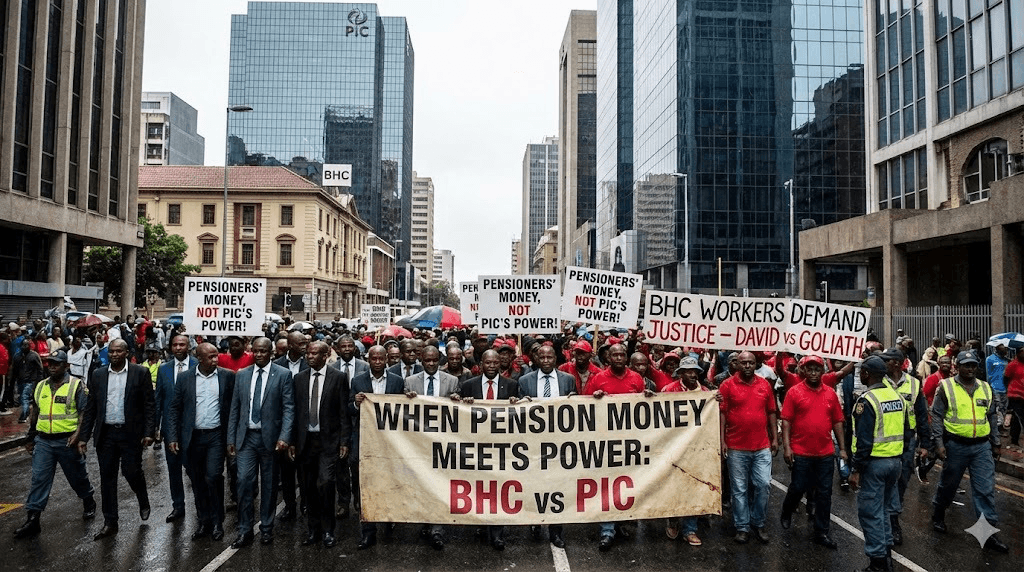
BHC frames this as more than a dispute. It’s a governance and accountability issue.
They say they’ve now filed a complaint with the Legal Practice Council because public funds should not be used to push positions that are “irrational” or inconsistent with binding agreements and established facts.
They also say it is “particularly troubling” that the very law firm accused of pushing the old-contract argument was involved in mediation and drafted the SPA meaning, according to BHC, they know what the real governing agreement is.
And then comes the line meant to shake Parliament awake:
BHC calls for urgent investigation into governance failures and accountability at the PIC, arguing that if South Africa is serious about empowerment and rule of law, this cannot be ignored.
Key points (in plain language)
- Bolatja Hlogo Consortium is accusing a top law firm and PIC’s legal head of misconduct and malpractice and has opened a formal complaint.
- They say PIC/GEPF are threatening to take their shares using an alleged “default” claim.
- Bolatja Hlogo Consortium says the “default” claim relies on an old agreement that was cancelled and replaced by a newer settlement contract.
- Bolatja Hlogo Consortium claims PIC/GEPF have been in default since 31 March 2025 for failing to pay under the settlement, and they’ve gone to court.
- BHC claims dividend money was blocked or “swept,” including a R600m dividend in April 2025, adding to a pattern of prejudice.
Also Read: Cat Matlala Linked to Gauteng Cop Who Admits Running Errands