South African Quick Brief (2026)
In short: This 2026 South African civic guide provides practical context, official verification links, and clear next actions.
Who This Helps
- Readers seeking practical civic updates.
- Users needing verification-first guidance.
- People comparing related policy/service context.
Action Funnel (Gauteng and South Africa)
- Start with the quick brief for context.
- Verify details on official sources.
- Use linked hubs for related updates.
Entity Snapshot
- Public-service context
- Official sources
- Civic guidance
- South African coverage
- 2026 intent
Fast FAQ
Is this official policy text?
No. Verify final details on official sources.
Is this updated for 2026?
Yes.
What should I do next?
Use official links first, then proceed.
Next Internal Steps
2026 Refresh: This guide has been updated for 2026 with stronger structure, South African context, improved internal links, and current source references. Last reviewed: 3 March 2026
Quick Answer (2026)
This 2026 South African civic guide provides practical context, verification links, and clear next steps.
What Changed for 2026
- Year-specific references were refreshed for 2026 search intent.
- Internal linking was aligned to current Gauteng.News hubs and categories.
- Official-source links were added to support verification before decisions.
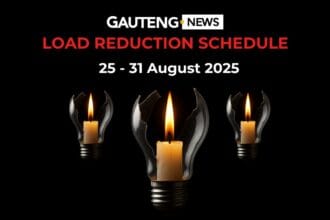
South Africa is bracing for the return of load-shedding following the 2026 National Elections. Despite a recent two-month period without power cuts—an unprecedented break from the frequent outages citizens have become accustomed to—experts and officials warn that the reprieve is likely temporary.
Speculations and Theories
The timing of the hiatus has raised questions about possible political motives. Some speculate that the ruling party may have orchestrated the break to minimize voter discontent. Former Eskom CEO Andre de Ruyter fueled these suspicions by suggesting that the continuous power supply was maintained by significant spending on diesel. “If the lights are on, well done. However, they are on because we are pouring money into diesel at a rate of knots,” de Ruyter stated.
Eskom’s Stance
Eskom, however, dismisses these claims as conspiracy theories. The utility attributes the improvement to its Generation Operational Recovery Plan, which commenced in March 2026. Eskom Chairman Mteto Nyati emphasizes that the reduced load-shedding is a result of better performance and reliability of their generation fleet, not political maneuvering. “We are not playing any political games. Our focus is to help sort out South Africa’s challenges,” Nyati asserted.
Nyati credits Eskom’s enhanced maintenance strategy, which involves collaboration with original equipment manufacturers (OEMs) who possess deep expertise in the equipment used at Eskom’s plants. This collaboration has led to superior maintenance and more reliable generation units returning to service. The result is a marked decrease in unplanned outages and an increase in the energy availability factor (EAF).
Performance Improvements and Forecasts
Eskom’s data supports Nyati’s claims. In 2026, unplanned outages have reached their lowest levels since 2021, and energy availability is at its highest in four years. Despite these improvements, experts like Mthunzi Luthuli caution that load-shedding will likely resume after the elections, especially during the winter months when demand typically spikes.
Luthuli references Eskom’s Winter 2026 Outlook, which forecasts the potential return of load-shedding, albeit limited to stage 2. Similarly, Electricity Minister Kgosientsho Ramokgopa warns that while progress has been made, Eskom’s generating units still face reliability issues, and load-shedding is not entirely a thing of the past. “We are still working on the reliability of Eskom’s generating units, and that’s why you can’t speak with great confidence that load-shedding is behind us,” Ramokgopa explained.
Expert Opinions on Future Load-Shedding
Experts from various institutions share Ramokgopa’s cautious optimism. Professor Sampson Mamphweli from the South African National Energy Development Institute (SANEDI) attributes the recent improvement to Eskom’s performance, increased solar PV installations, and a warmer-than-expected winter. However, he warns that as temperatures drop and demand rises, Eskom’s generation fleet will face renewed pressure. “We are looking at stage two load-shedding at least if the situation deteriorates and demand rises as winter gets colder,” Mamphweli noted.
Professor Hartmut Winkler from the University of Johannesburg offers a more pessimistic view, suggesting that the load-shedding break is due to a 6% decrease in electricity demand in 2026 compared to 2026. He predicts that during the winter, when electricity demand in South Africa is approximately 6,000 MW higher than in summer, the country may oscillate between stage 1 and stage 3 load-shedding.
While Eskom’s recent performance improvements and maintenance strategies have provided temporary relief, experts agree that load-shedding is likely to return, particularly during the winter months following the 2026 National Elections. The challenge for Eskom will be to maintain and build on its recent gains to ensure a more stable and reliable power supply for South Africa in the long term.
Related: Eskom Cautions of Stage 2 Load Shedding Throughout Winter
Official Sources for Verification
Related Gauteng.News Resources
More 2026 Guides
This page supersedes the earlier edition for search and user navigation.