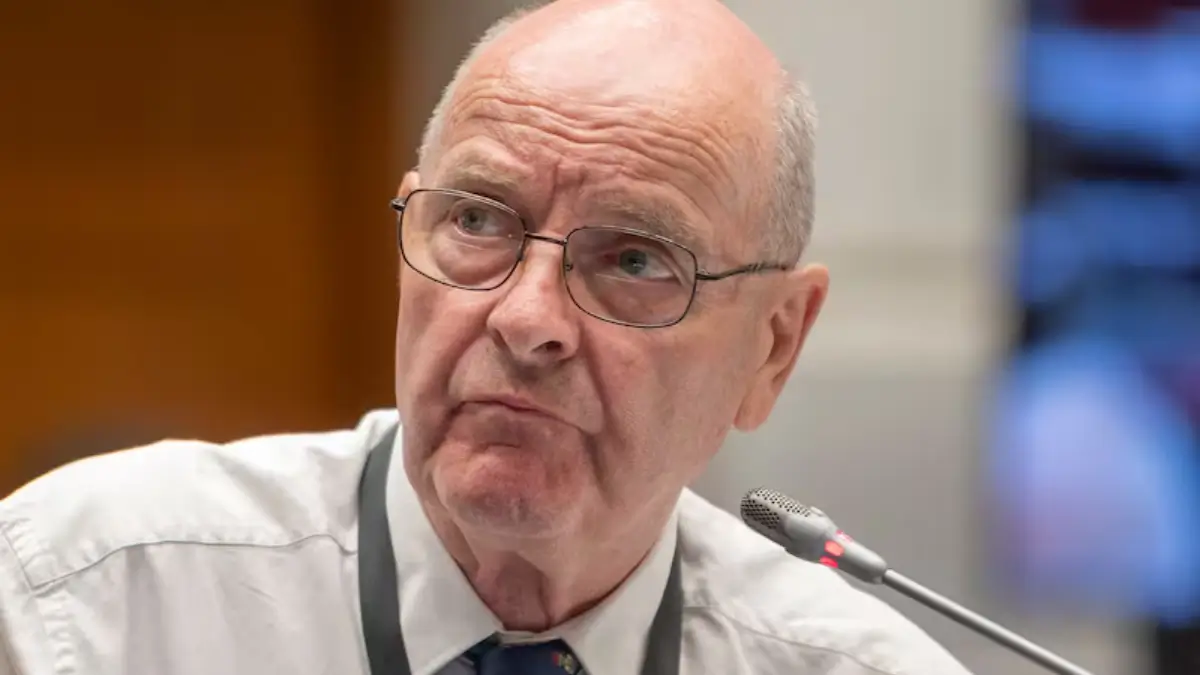
Forensic investigator Paul O’Sullivan delivered two days of wide-ranging testimony before Parliament’s ad hoc committee this week, making allegations involving senior South African Police Service leadership, intelligence funding structures, and presidential advisers. The claims, presented under oath, have triggered renewed scrutiny over police governance and political interference. Proceedings were adjourned late Wednesday evening after O’Sullivan reported severe spinal pain, with testimony expected to resume at a later date.
His statements, which touched on events spanning more than two decades, carry potential implications for law enforcement oversight, executive accountability, and intelligence funding structures across the country.
ALSO READ: Thabo Bester’s Attempt to Return to Gauteng Prison Rejected in Court
Day One: Senior SAPS Leadership and Historical Political Tensions
During the first day of testimony, O’Sullivan criticised senior SAPS officials, referring to certain generals as “rogue” and raising concerns about internal oversight structures.
Among those referenced were:
- National Commissioner General Fannie Masemola
- KwaZulu-Natal Commissioner Lieutenant-General Nhlanhla Mkhwanazi
O’Sullivan revisited his role in investigations linked to former national commissioner Jackie Selebi, who was convicted in 2010 on corruption-related charges. He outlined how evidence connected to convicted drug trafficker Glen Agliotti formed part of that case.
He also referenced the political tensions between former presidents Thabo Mbeki and Jacob Zuma during the mid-2000s, arguing that law enforcement structures were drawn into political conflict ahead of the ANC’s 2007 Polokwane conference. The so-called “spy tapes” were cited in his testimony, noting their relevance to the withdrawal of charges against Zuma in 2009.
O’Sullivan denied allegations that he operated as a foreign agent, stating that although he holds Irish, British, and South African citizenship, his loyalty is to South Africa.
Day Two: AfriForum Membership and Presidency Links
On the second day, Members of Parliament questioned O’Sullivan about his affiliations and influence.
He confirmed that he is a member of AfriForum and addressed the circumstances surrounding his 2017 arrest, maintaining he was visiting his attorney at the time.
Under questioning from ANC MP Khusela Diko, O’Sullivan disclosed that former presidential adviser Bejani Chauke allegedly sought his informal advice during the 2022 process to appoint a permanent national police commissioner following General Khehla Sitole’s removal.
According to O’Sullivan:
- His organisation, Forensics for Justice, conducted lifestyle audits on eight shortlisted candidates.
- Six candidates were deemed unsuitable.
- General Fannie Masemola was ultimately appointed on 31 March 2022.
He further raised concerns regarding:
- The Crime Intelligence Secret Services Account
- Alleged corruption within the Political Killings Task Team
- The preparation of a statement allegedly presented by Lieutenant-General Mkhwanazi in July 2025
These claims have not yet been formally tested through independent findings.
Phala Phala and Ramaphosa Allegations Addressed
O’Sullivan rejected claims that he investigated or assisted President Cyril Ramaphosa regarding the Phala Phala matter. He told MPs he became aware of the issue through media reports and later opened a perjury case against former intelligence chief Arthur Fraser.
The testimony also resurfaced a historical connection between O’Sullivan and Ramaphosa. He told the committee that in 1997, while lecturing at a SAPS training centre, he trained Ramaphosa as a volunteer police reservist.
He stated that training modules included:
- Criminal law
- Police administration
- Investigation techniques
- Constitutional principles and the Bill of Rights
O’Sullivan described it as “ironic” that Ramaphosa, who played a key role in drafting South Africa’s 1996 Constitution, attended constitutional training sessions.
Proceedings Adjourned Due to Ill Health
Shortly after 7 pm on Wednesday, O’Sullivan informed the committee he was experiencing severe spinal pain related to previous surgery.
Committee chairperson, Soviet Lekganyane, adjourned proceedings. The committee is expected to reconvene at a later stage, although no confirmed date has been announced.
What This Means for Gauteng Residents
While the testimony centres on national leadership structures, its implications extend to Gauteng residents in practical ways.
SAPS governance and intelligence oversight affect:
- Crime prevention capacity
- Public trust in policing
- Provincial coordination between national and metropolitan law enforcement
- Accountability within intelligence funding structures
Given Gauteng’s high crime burden and the presence of national government institutions in Pretoria, developments in police leadership and oversight directly influence the province’s law enforcement landscape.
However, the claims remain allegations until corroborated or investigated further.
Broader Context: Oversight and Institutional Accountability
Parliament’s ad hoc committee was established to examine governance concerns within SAPS and related structures. Testimony from individuals such as O’Sullivan forms part of broader oversight processes designed to assess transparency and accountability.
It remains unclear whether the committee will:
- Recommend further investigations
- Refer matters for criminal inquiry
- Summon additional witnesses
The proceedings contribute to the ongoing national debate about police reform and intelligence accountability.
FAQ’s
Why was Paul O’Sullivan testifying before Parliament?
He appeared before an ad hoc committee examining governance and oversight issues within SAPS and related institutions.
Were his allegations proven?
No. The statements were presented as testimony and have not yet been independently verified.
Did he claim involvement in the Phala Phala matter?
He denied assisting President Ramaphosa and stated he only became aware of the matter through media coverage.
Why were proceedings adjourned?
The hearing was halted after O’Sullivan reported severe spinal pain.
Will the hearings resume?
Yes. The committee indicated that testimony will continue at a later date.
What Happens Next
The ad hoc committee is expected to reconvene to allow O’Sullivan to complete his testimony. Members of Parliament may also call additional witnesses or request documentation linked to the claims raised.
Until formal findings are issued, the allegations remain part of an ongoing parliamentary process.
Further developments will depend on the committee’s recommendations and any subsequent investigative action.