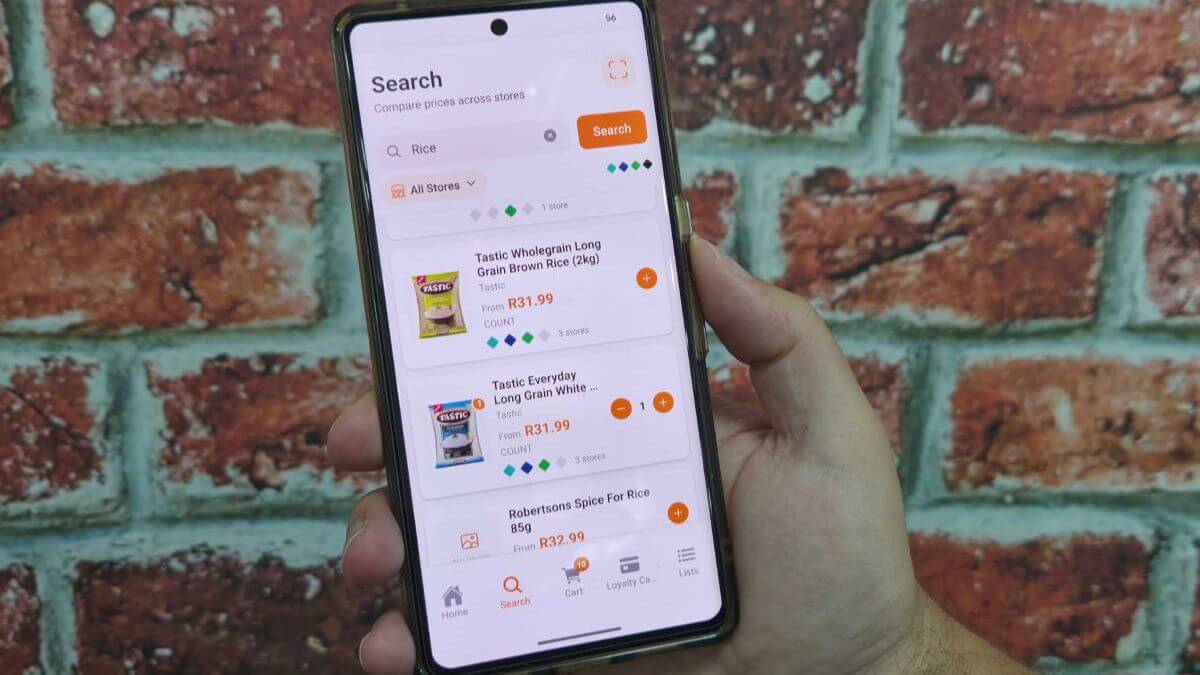
New grocery app tools keep gaining attention as grocery costs keep moving. Grocify, built by Johannesburg-based software engineer Ethan Stander, compares up-to-date product prices across four major retailers: Checkers, Pick n Pay, SPAR and Woolworths.
- App name: Grocify
- Retailers: Checkers, Pick n Pay, SPAR, Woolworths
- Access: invitation-only preview on Google Play Store
- Cost: free, with no sign-up required
- Planned public launch: end of February 2026
New grocery app Grocify focuses on local store pricing
Shoppers often see different prices across suburbs and towns. Stander built Grocify to show local pricing, based on nearby stores, instead of generic national specials.
Stander told MyBroadband: “The positive feedback so far has been incredibly encouraging.”
Grocify asks for location access, then finds nearby stores for side-by-side price checks. The app requires no account and requests no personal details during use.
Important note for shoppers
MyBroadband warns about name confusion. Grocify is not yet public, and readers should not confuse Grocify with “Grocify: Online Grocery Store” from Tech RTY.
How Grocify finds cheapest supermarket prices
Search, compare, then choose one store or many stores:
Grocify lists products from cheapest to most expensive, based on nearby stores. When multiple retailers share the same price, the app uses store distance as a tie-breaker.
The Cart section splits into two useful views:
- “Your Items” shows a simple list of items plus the cheapest store per item.
- “Compare Prices” shows the cheapest possible combination across stores, plus baskets per retailer for shoppers who prefer one stop.
Barcode scanning supports in-store checks
A barcode scanner lets shoppers scan an item in a store and compare nearby store prices.
Why grocery price comparison matters right now
Food price movement stays uneven across categories. Stats SA recorded annual food and non-alcoholic beverages inflation at 3.9% in October 2025. Meat inflation stayed in double digits at 11.4% during the same period.
Online shopping also keeps growing, so pricing pressure keeps shifting across retailers and channels. World Wide Worx reported online retail turnover of R71 billion in 2023, up 29% from 2022, with expectations to break R100 billion by 2026.
Smart ways to use grocery comparisons for real savings
- Build a short list of weekly staples (bread, milk, rice, cleaning items).
- Compare totals across baskets, not single items only.
- Split shops only when travel time stays low.
Practical tips
- Watch “missing” items and stock gaps before driving out. MyBroadband noted early-build stock mismatches during testing.
- Use per-store baskets for fast planning when time matters.
- Save loyalty details in one place. Grocify supports loyalty card storage and frequent-item lists, plus PDF export for lists.
Accuracy, privacy, and limits to keep in mind
No comparison tool stays perfect. Prices shift, stock changes, and catalogue gaps happen.
Key points to check
- Location access powers nearby store results.
- Early builds often show small data errors, so shoppers should double-check at checkout.
- Public availability remains pending. Stander expects a public launch by end of February 2026.
Also Read: What is The Hype Around Smart Watches for?